

Why Strength Training Might Be the Single Best Thing You Do for Longevity
Quick Answer
Strength training is one of the few habits research consistently links to a longer, more independent life. Multiple large studies associate resistance training with meaningfully lower all-cause mortality risk, and it directly counters the muscle loss that begins in your 30s. Two to three sessions a week is enough to start seeing the benefit. No bodybuilder training required.
In This Article
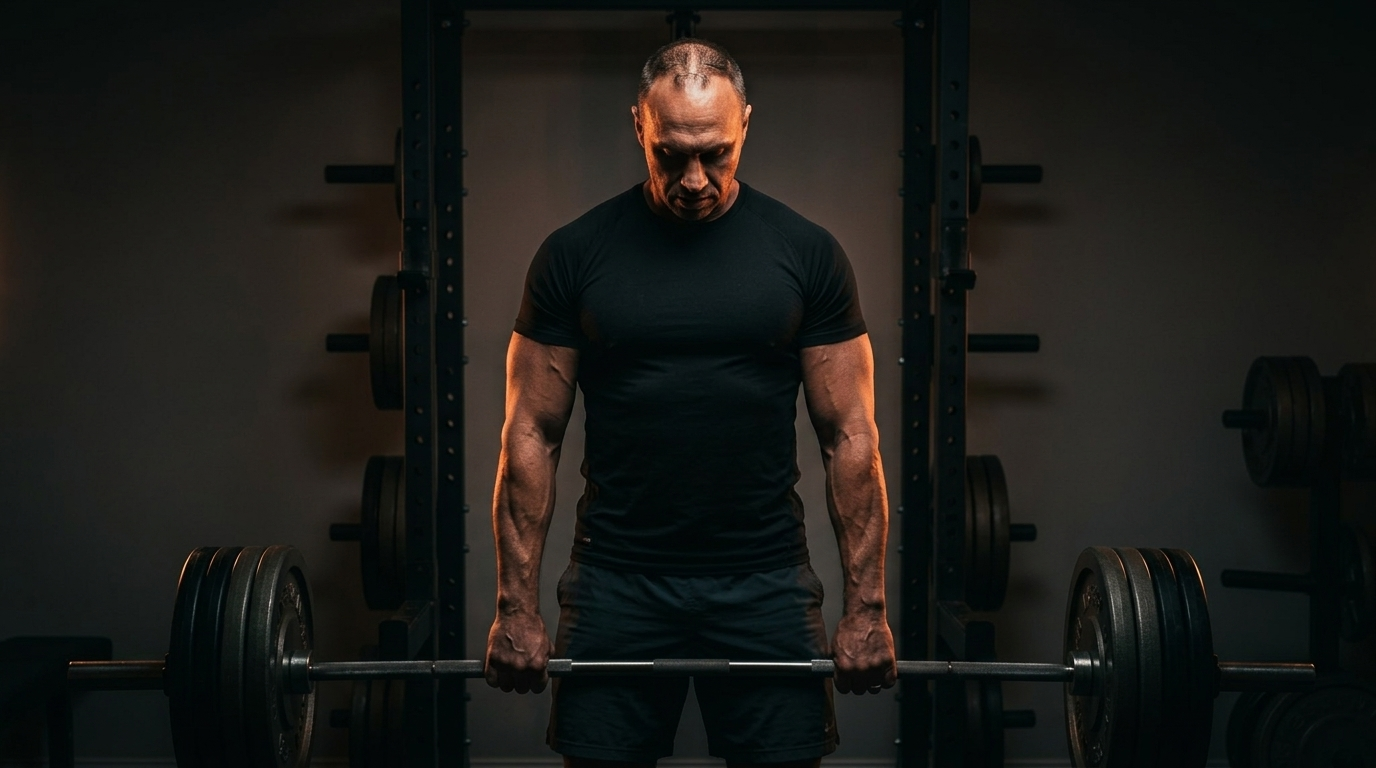
Strength training does more than build muscle. It supports the systems your body relies on to stay capable as you age: bone density, balance, blood sugar control, and the muscle mass that keeps you independent later in life. Men who lift weights regularly tend to maintain more muscle, move with better balance, and recover faster from everyday strain than men who rely on cardio alone. You don't need to chase a personal record or train like a bodybuilder. Two or three short strength sessions a week, done consistently, is enough to start seeing the difference. This isn't about looking a certain way. It's about staying strong enough to do the things you actually want to do, for as long as possible.
What Happens to Muscle As You Age
After age 30, most men start losing muscle mass gradually every year if they don't do anything to stop it. Research consistently puts the rate at roughly 3 to 5 percent of muscle mass lost per decade starting in your 30s, with that pace picking up again after 60. Left unaddressed, it adds up to a meaningful share of your total muscle mass by the time you reach your 70s and 80s. Less muscle means less strength for everyday tasks: carrying groceries, climbing stairs, getting up off the floor. It also means a slower metabolism, since muscle burns more energy at rest than fat does. Strength training is one of the few things that directly fights this decline. When you challenge your muscles with resistance, your body responds by rebuilding and maintaining that tissue, even as you get older. This process responds to training at any age. It isn't a one-way street.
What the Research Actually Shows
The connection between strength training and longevity isn't just theory. It shows up clearly in large-scale research. A 2023 scientific statement from the American Heart Association, published in the journal Circulation, found that resistance training alone is associated with an 18 to 29 percent lower risk of all-cause and cardiovascular mortality compared to no exercise at all. Combining resistance training with cardio was linked to an even larger reduction, 40 to 46 percent lower risk.
A separate 2022 systematic review and meta-analysis in the American Journal of Preventive Medicine, described by its own authors as the strongest evidence to date on the subject, reached a similar conclusion: resistance training is associated with reduced risk of all-cause, cardiovascular, and cancer-specific mortality. A 2024 cohort study of older adults, published in the International Journal of Epidemiology, found that performing any amount of weight training was linked to lower risk across those same three categories.
None of this means lifting weights guarantees a longer life. These are large observational associations, not individual promises, and researchers are still working out exactly how much of the effect comes from the training itself versus the broader healthy habits that tend to accompany it. But when several independent, large-scale studies point in the same direction, that consistency is worth paying attention to, especially for a habit that also improves how you feel and function day to day.
It's Not About Looking Like a Bodybuilder
You don't need a gym membership or a rack of dumbbells to start. Bodyweight moves like squats, push-ups, and rows work the same major muscle groups as barbell training. What matters is consistency and progressive challenge: doing a little more than you did last time, whether that's an extra rep, a few more pounds, or a harder variation. Two or three sessions a week, 30 to 45 minutes each, covering your legs, back, chest, and core, is a solid foundation. You don't have to train every day to see real change. If lack of equipment or gym access has been the thing holding you back, that's not actually the barrier it seems like. A bodyweight routine done consistently in your living room beats a gym membership that goes unused.
Where to Start If You're Over 40
If it's been a while since you lifted anything heavier than a laundry basket, start slow. Focus on form before load. A few compound movements, squats, deadlifts or hip hinges, push-ups or presses, and rows, cover most of what your body needs. A simple starting structure: two to three sets of eight to twelve reps per movement, stopping a rep or two short of failure. Add a small amount of weight or an extra rep every week or two as it gets easier. That slow, steady increase, known as progressive overload, is what actually drives the adaptation. Give yourself a full day of rest between sessions that hit the same muscle groups. And pay attention to recovery: sleep and protein intake matter just as much as the workout itself when it comes to actually building and keeping muscle.
Common Mistakes to Avoid
- Going too hard, too fast. Jumping into heavy weights or daily sessions before your joints and connective tissue adapt is a fast way to get sidelined by an injury, which stops progress completely.
- Skipping the boring stuff. Warm-ups, mobility work, and proper form aren't exciting, but they're what keep you training consistently instead of dealing with setbacks.
- Treating it as all-or-nothing. Missing a planned session doesn't erase progress. The habit that survives a busy week matters more than the perfect week that never gets repeated.
- Ignoring recovery. Muscle isn't built during the workout. It's built during the rest and repair afterward. Under-sleeping or under-eating protein undercuts the training itself.
- Comparing yourself to your 25-year-old self. Recovery capacity changes with age. Progress now looks different than it did then, and that's normal, not a sign something's wrong.
Built for the Long Game
Training hard is only half the equation. Recovery and daily energy matter too.
Visit Black Ridge PerformanceThe Bottom Line
Strength training isn't just for younger guys chasing size in the mirror. It's one of the most direct, well-researched ways to stay capable, independent, and strong as you age. Start small, stay consistent, and give your body the recovery it needs to keep making progress.
FAQ
How many days a week should I strength train after 40?
Two to three sessions a week is enough for most men to see real benefits. What matters more than frequency is consistency over time and allowing at least one rest day between sessions that work the same muscle groups.
Is it too late to start strength training if I've never lifted before?
No. Muscle responds to resistance training at any age. Starting later means starting slower and focusing on form, but the body's ability to build and maintain muscle doesn't disappear with age.
Do I need weights, or can bodyweight exercises work?
Bodyweight exercises like squats, push-ups, and rows can build real strength, especially when you're getting started. As you progress, adding resistance, whether weights, bands, or more challenging bodyweight variations, helps keep the progress going.
How long before I notice a difference?
Most men notice they feel stronger in daily tasks within a few weeks of consistent training. Visible changes in muscle and body composition typically take longer, often eight to twelve weeks of consistent effort.
Can strength training reverse muscle loss that's already happened?
In many cases, yes. Research shows older adults, including those already dealing with age-related muscle loss, can rebuild meaningful muscle mass and strength with consistent resistance training. It's rarely too late to start seeing real improvement.
Is walking or cardio enough on its own for longevity?
Cardio has its own well-documented benefits, but it doesn't provide the same stimulus for maintaining muscle mass and strength. Research suggests combining resistance training with cardio is associated with the largest reduction in mortality risk, greater than either one alone.
Does diet matter as much as the training itself?
Yes. Adequate protein intake and overall calorie balance directly affect how much muscle you can build and keep. Training provides the stimulus, but diet and sleep provide the raw materials and recovery time your body actually needs to adapt.
Sources
- Shailendra P, et al. "Resistance Training and Mortality Risk: A Systematic Review and Meta-Analysis." American Journal of Preventive Medicine, 2022.
- American Heart Association. "Resistance Exercise Training in Individuals With and Without Cardiovascular Disease: 2023 Update." Circulation, 2023.
- "Weight training and risk of all-cause, cardiovascular disease and cancer mortality among older adults." International Journal of Epidemiology, 2024.
- Harvard Health Publishing. "Preserve your muscle mass." Harvard Medical School.
This article is for general education and is not medical advice. Talk with your doctor before starting a new exercise program, especially if you have an existing health condition or injury.