
The Biohacking Backlash: Why 2026's Biggest Wellness Trend Is Doing Less, Not More
Quick Answer
The Global Wellness Summit's 2026 Future of Wellness report named the over-optimization backlash its defining trend of the year: a shift away from expensive gadgets, complex supplement stacks, and constant health tracking, and back toward the fundamentals that actually drive long-term health. Sleep, real food, movement, and stress management still do more heavy lifting than any elaborate longevity protocol.
In This Article
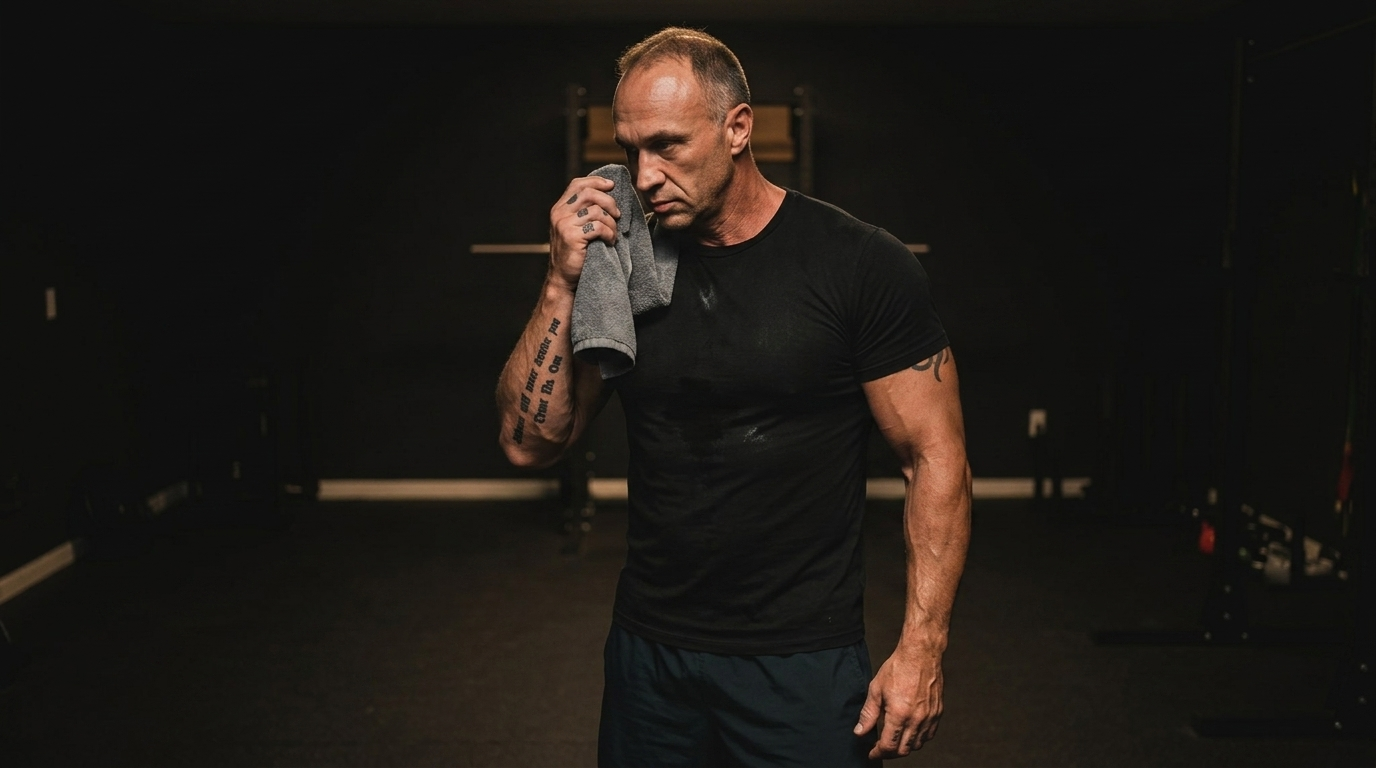
Every January, the Global Wellness Summit releases its Future of Wellness report, a forecast built from input across the health and wellness industry. For 2026, the defining trend isn't a new supplement, a new device, or a new protocol. It's a retreat from all of that. The report calls it the over-optimization backlash, and it's worth understanding what's actually driving it, because the fundamentals it points back to are the same ones that have worked all along.
What the 2026 Wellness Trend Report Found
The Global Wellness Summit named the over-optimization backlash its framing trend for 2026, describing a shift away from measurement and performance-driven wellness and toward simpler, more sustainable habits. The pattern shows up across the industry: continuous glucose monitors on people without diabetes, biohacking protocols with dozens of steps, and longevity supplement stacks that cost more than a car payment, all increasingly meeting skepticism rather than enthusiasm. Physicians and commentators with large followings have started publicly pushing back on elaborate optimization routines, and that criticism is landing with an audience that's grown tired of the complexity.
Why the Backlash Happened
The core problem the report identifies is straightforward: more data has not made people healthier, it's made them more anxious. Sleep scores, heart rate variability dips, glucose spikes on a monitor, these numbers were supposed to bring clarity, but for a lot of people they became just one more thing to worry about. Constant self-tracking can turn ordinary variation, a slightly worse night of sleep, a normal post-meal glucose bump, into a source of stress rather than useful information. That stress response works directly against the outcomes people were trying to optimize for in the first place.
There's also a simpler explanation running alongside the psychological one: fatigue. Years of being told there's always one more upgrade, one more device, one more supplement stack needed to be truly optimized has left a lot of people exhausted rather than motivated. Wellness was supposed to feel like relief. For a growing number of people, it started feeling like another job with an ever-expanding list of requirements. The backlash is, in part, simply people deciding that's not sustainable.
What Actually Drives Long-Term Health
The fundamentals the report points back to aren't new, and that's the point. Sleep, nourishing food, stress management, meaningful relationships, movement you actually enjoy, and a sense of purpose remain the biggest levers for long-term health, ahead of any individual biohack or supplement. None of that requires a subscription, a wearable, or a five-step morning routine. It requires consistency with things that are, honestly, a little boring. That's also exactly why they get overlooked in favor of something that feels more like progress: a new gadget, a new stack, a new protocol.
What makes this shift notable is where it's coming from. This isn't a fringe critique of the wellness industry from outside it. It's the industry's own trend forecasters, the people whose job is to track what's actually working and what's just noise, naming simplicity as the standout theme for the year ahead. When the forecasters who spent the last several years cataloging an ever-expanding list of devices and protocols start pointing back to sleep and basic movement, that's a meaningful signal, not a minor course correction.
The Cost of Constant Optimization
Beyond the financial cost of expensive stacks and devices, there's a real psychological cost to treating health as something that needs constant monitoring and adjustment. Health perfectionism, the pressure to optimize every measurable input, can create the exact anxiety and stress that undermines the health it's meant to protect. Picture someone checking a sleep score every morning and feeling their day is already off to a bad start because of a number on a screen, regardless of how they actually feel. That's the pattern the report is describing: the tool meant to inform decisions becomes the thing driving stress instead. The industry's own trend researchers are now naming this directly, which is a notable shift from a few years of nonstop escalation in tracking and protocol complexity.
Built for the Long Game
No elaborate stacks, no manufactured urgency. Just fundamentals worth building on.
Visit Black Ridge PerformanceWhat This Means for How You Approach Your Health
None of this means tools and tracking have no place. It means they're not a substitute for the fundamentals, and chasing complexity for its own sake isn't the same as chasing results. If you've felt like everyone else has a more sophisticated protocol than you, the industry's own 2026 outlook suggests that instinct might be backwards. Consistency with the basics still outperforms an elaborate routine that's too complicated to actually stick with.
The Bottom Line
The wellness industry's own trend forecasters are calling this the moment to do less, not more. Sleep, real food, movement, stress management, and connection remain the highest-leverage things you can actually control, and none of them require a five-figure stack. If a routine feels too complicated to maintain, that complexity is probably costing you more than it's giving back.
FAQ
What is the "over-optimization backlash"?
It's the term the Global Wellness Summit used in its 2026 Future of Wellness report to describe a shift away from constant health tracking and complex biohacking protocols and back toward foundational habits like sleep, nutrition, and stress management.
Does this mean tracking devices like sleep trackers are bad?
Not necessarily. The concern is treating tracking data as a source of constant anxiety rather than useful, occasional information, and assuming more data automatically means better health.
Are expensive longevity supplement stacks worth it?
The 2026 trend research suggests most people get more benefit from consistent fundamentals than from complex, expensive stacks, though individual supplements can still play a supporting role alongside those fundamentals.
What are the fundamentals that actually matter?
According to the 2026 wellness trend research, sleep, nourishing food, stress management, meaningful relationships, movement you enjoy, and a sense of purpose are the biggest drivers of long-term health.
Why did an industry built on optimization start pushing back on it?
Trend researchers observed that constant self-optimization was increasingly linked to anxiety and stress rather than better health outcomes, prompting a documented shift in the industry's own guidance.
Is this trend specific to any age group?
The backlash spans the wellness industry broadly, though it's especially relevant for anyone who has felt pressure to adopt increasingly complex routines to keep up with wellness trends.
How does Black Ridge fit into this shift?
Black Ridge has always focused on fundamentals over complexity: training, recovery, and straightforward support, not elaborate stacks or manufactured urgency. This trend affirms an approach we've taken from the start.
Sources
- Global Wellness Summit. "Global Wellness Summit Releases 10 Wellness Trends for 2026." Press release, January 2026.
- Institute for Integrative Nutrition. "The Over-Optimization Backlash: Why the Wellness World Is Coming Back to What Actually Works." 2026.
- "The Over-Optimization Backlash: Why 2026's Biggest Wellness Trend Is Doing Less." 2026.
This article is for general education and is not medical advice. Talk with your doctor before making changes to your health, wellness, or supplement routine.